
Polycarbonate (Lexan) Labels
Durable industrial labels designed to outlast the equipment they sit on
Polycarbonate labels, often referred to by the brand name Lexan, are one of the most hard-wearing label options available. Reverse printed, scratch resistant and built to withstand heat, chemicals and constant handling, they’re the default choice for control panels, membrane switches and machinery identification where a standard label simply won’t last.
We produce custom polycarbonate labels to your specification, from single prototypes to full production runs. We’ll help you match the substrate, adhesive and finish to the conditions the label will actually face, and deliver a product that holds up.
What are polycarbonate labels?
Polycarbonate is a tough, transparent plastic with high impact strength, good heat tolerance and strong chemical resistance. It’s the same material family used in safety glazing and protective screens, which tells you most of what you need to know about how it performs.
For labels, the real advantage is how polycarbonate gets printed. The design is applied to the reverse side of the material using a process called subsurface or second-surface printing. The print sits underneath the clear polycarbonate layer, protected from everything that would otherwise wear it away. Solvents, cleaning chemicals, abrasion, UV exposure and repeated touch all hit the polycarbonate surface first, not the ink.
The result is a label that stays sharp and legible for the service life of the equipment it’s applied to, often ten years or more in demanding industrial conditions.
Key benefits
High durability and impact resistance. Polycarbonate is engineered for toughness. Labels resist cracking, chipping and surface damage even with heavy handling.
Heat and chemical resistance. Performs reliably at sustained temperatures typically up to 120°C, and resists most industrial solvents, oils, fuels and cleaning agents.
Reverse printed for long-life graphics. The protected print layer keeps branding, legends and safety information sharp, even after years of contact, cleaning and environmental exposure.
Built for harsh environments. Factory floors, control rooms, outdoor equipment, vehicle interiors, electrical enclosures. Wherever standard labels would fade, peel or tear, polycarbonate holds its place.
Scratch resistant surface options. Matte and textured finishes add a further layer of wear resistance and reduce glare on operator-facing panels.Product labels can make or break the success of your product. Too much information? Not enough information? Poor logo use? We’ll help you to refine your product label design and printed label solution.
Common uses
Polycarbonate labels are specified wherever long service life, legibility and physical resilience matter.
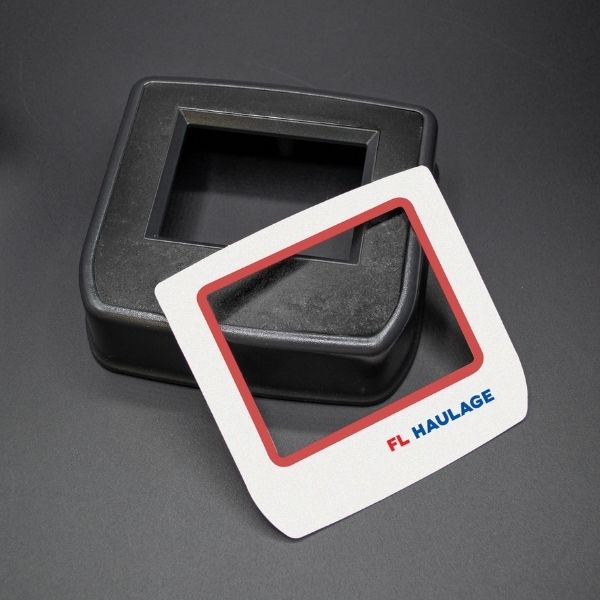
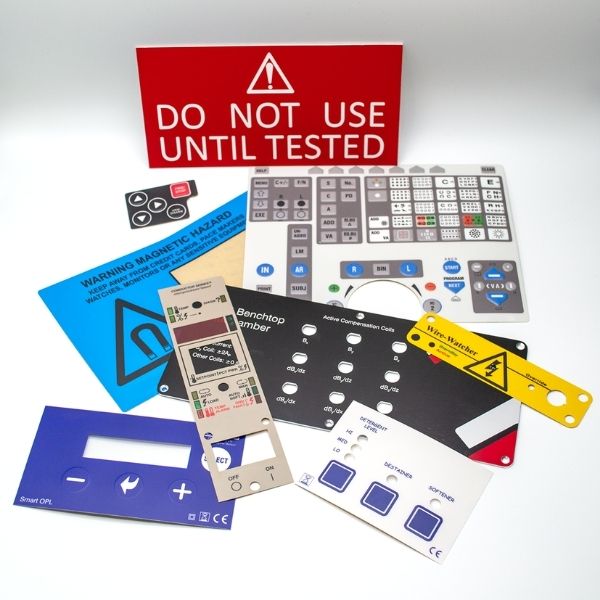
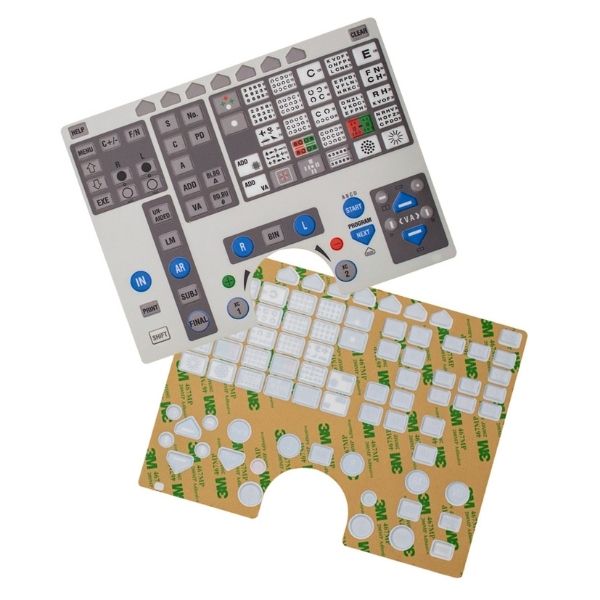
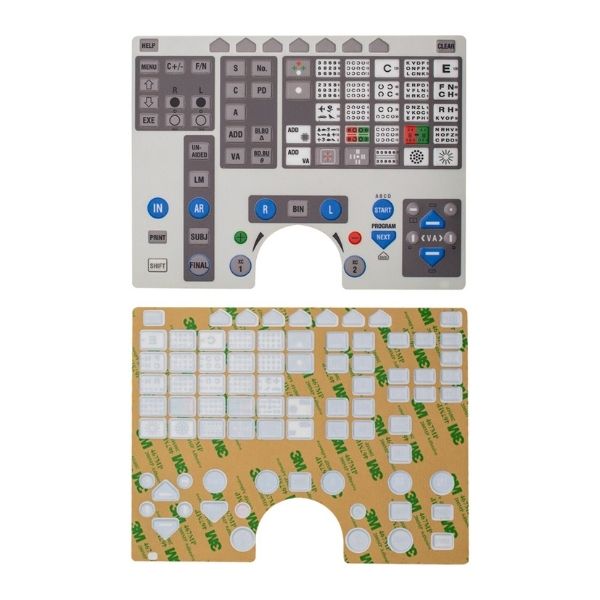
- Control panels and membrane switches. Printed overlays for operator interfaces, with cut-outs, windows and tactile domes where needed.
- Machinery branding and identification. Manufacturer plates, model and serial number labels, asset tags built to last the life of the equipment.
- Industrial equipment labels. Rating plates, safety warnings, compliance marks and instructional labels for use in manufacturing, process and utilities environments.
- Electrical and electronic interfaces. Fascias for control boxes, instrumentation panels, metering equipment and electronic enclosures.
- Rating and data plates. Regulatory information, technical specifications and identification data printed to stay legible across the product’s working life.
Customisation options
Every polycarbonate label we produce is made to brief. We’ll work with you on the full specification, not just the artwork.
Finishes. Choose from matte, gloss, velvet or textured finishes. Matte and textured surfaces reduce glare and fingerprints, ideal for operator panels. Gloss gives a sharper, more premium finish for branding and identification plates.
Adhesives. We specify adhesives based on the surface the label will be applied to and the conditions it’ll face. Options cover smooth plastics, powder-coated metal, low surface energy surfaces and high-temperature applications.
Embossing and doming. Embossed keys give tactile feedback for membrane switches and operator controls. Clear polyurethane doming adds a raised, three-dimensional finish for premium branding applications.
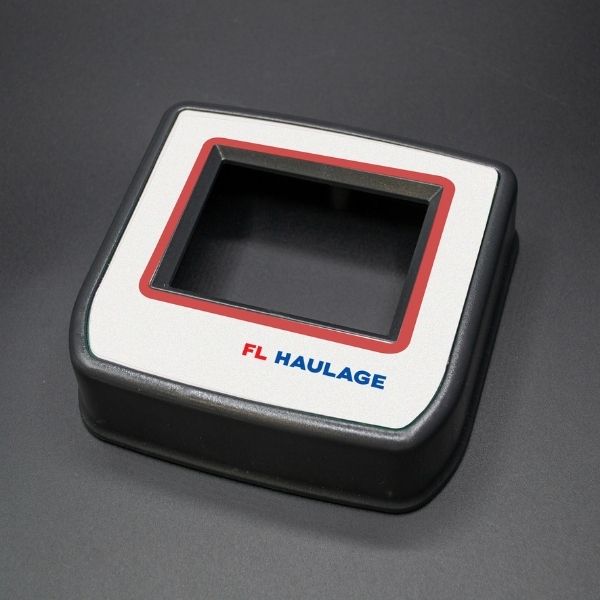
Custom shapes and sizes. Die cut to any profile, with cut-outs for LEDs, displays, buttons and screws. No standard stock sizes, we produce to your drawing.
Colours and print. Solid block colours, metallic finishes, process print for detailed graphics, and selective transparency for backlit panels and indicator windows.
Overlaminates and hardcoats. Additional protective layers where the application calls for even higher chemical or abrasion resistance.
Why Birch?
We produce polycarbonate labels as part of a wider technical and industrial label offering, backed by more than 40 years of print experience and a full-service model that covers design, production, storage and delivery.
Technical specification support. We help you choose the right combination of substrate, adhesive, finish and print process based on where the label will live and what it’ll face. Not a catalogue default, a specified product.
High-quality materials and finishes. We print on genuine polycarbonate substrates from accredited suppliers, with finishes and adhesives matched to industrial-grade requirements.
Custom solutions, any volume. From a single prototype to ongoing production runs, we produce to your drawing and your timeline.
Accredited sourcing. FSC certified supply chain where applicable, with BPIF and Two Sides membership backing our sustainability commitments.
One partner, end to end. If your polycarbonate labels sit alongside wider print needs, packaging, POS, operational print, we can handle the lot under one roof.
Related Pages



Frequently asked questions
What's the difference between polycarbonate and polyester labels?
Is Lexan the same as polycarbonate?
How long do polycarbonate labels last?
Can polycarbonate labels be used outdoors?
What thicknesses are available?
Can you produce polycarbonate labels with embossed keys for membrane switches?
Do you handle low volume and prototype runs?
–––––––––––––– Get a quote or request a sample ––––––––––––––
Call 0115 951 2468 or email team@birchprint.co.uk
Samples available on request for qualified applications.
